
What causes string slap, and how to stop it
By Corinne Vasek, club archery coach · Updated
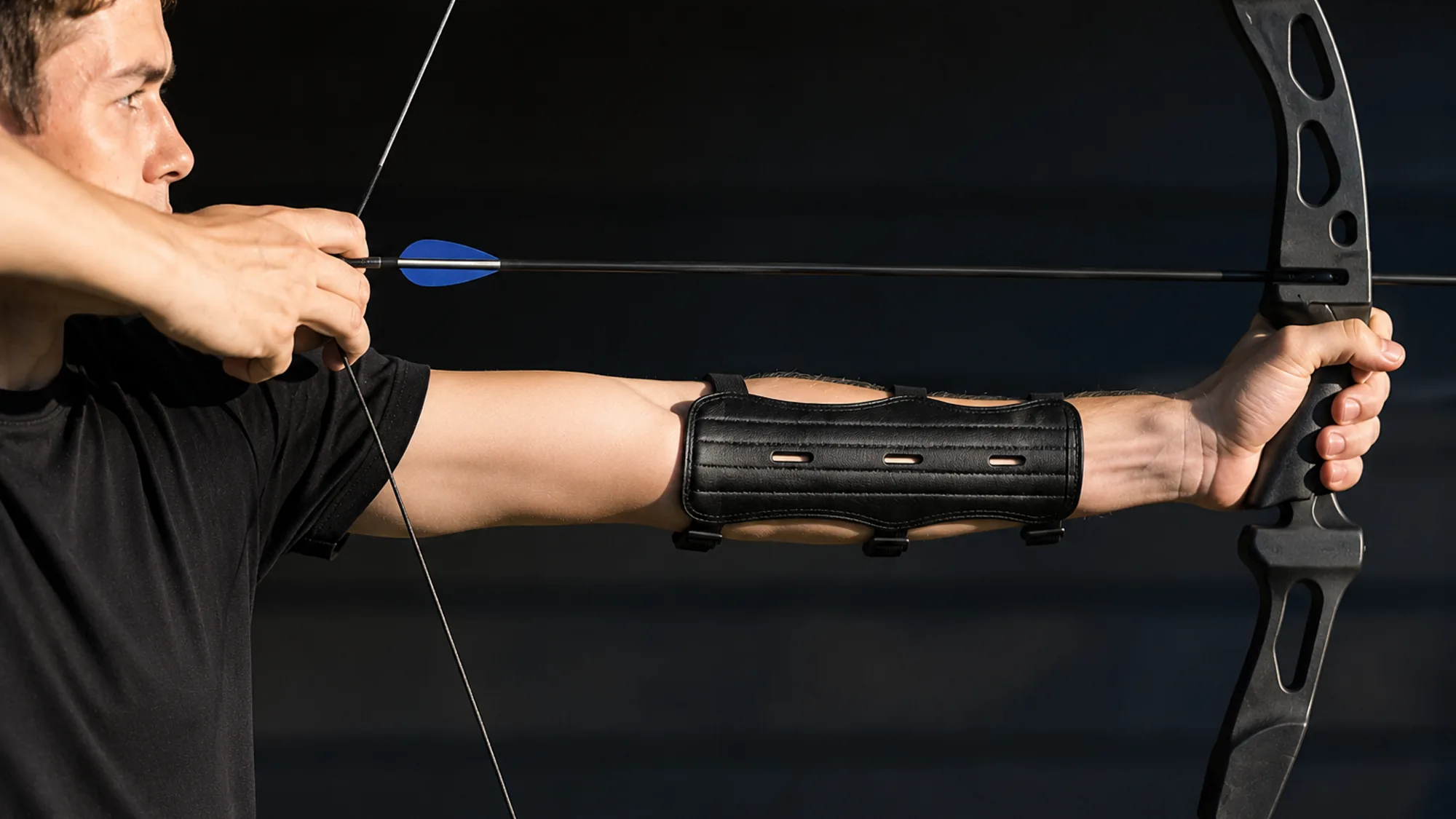
Almost everyone gets hit at least once. It is one of the few genuinely universal experiences in archery, and the mark it leaves is distinctive enough that other archers recognise it across a car park. A straight purple line down the inside of the forearm, going yellow at the edges by day three.
What is less universal is understanding why it happened, which is a shame, because the cause is usually one of three things and two of them take a single session to fix.
On this page
What string slap actually is — and why it costs you the shot, not just the skin.
Cause one: the locked elbow — the big one, and the fix.
Cause two: your clothing — why it happens on cold mornings.
Cause three: brace height — the equipment answer.
Diagnosing which one is yours.
The part nobody warns you about — the flinch.
What string slap actually is
On release, the bowstring travels forward from your fingers to the brace position in a few thousandths of a second, carrying a substantial amount of stored energy. If your bow-arm forearm is in that path, it takes part of that energy. On bare skin the string leaves a linear contusion: broken capillaries under the surface, which is why it goes purple then yellow rather than simply going red.
The 2023 epidemiological review of archery injuries published in Orthopedic Reviews records contusions and abrasions as 7.5 percent of archery injuries in men, alongside lacerations at 58.1 percent and fractures at 12.7 percent. The paper does not break its figures down by body part, so nobody should quote you a forearm-specific number. What it does do is recommend forearm braces among the safety equipment archers should use, which tells you how the clinical literature views the problem.
There is a second cost, and it is the one archers underrate. A string that clips your forearm loses energy and gets deflected. That arrow goes wide, in a direction that depends on your handedness. So the shot on which you get hit is also a shot you have lost.
Cause one: the locked bow elbow
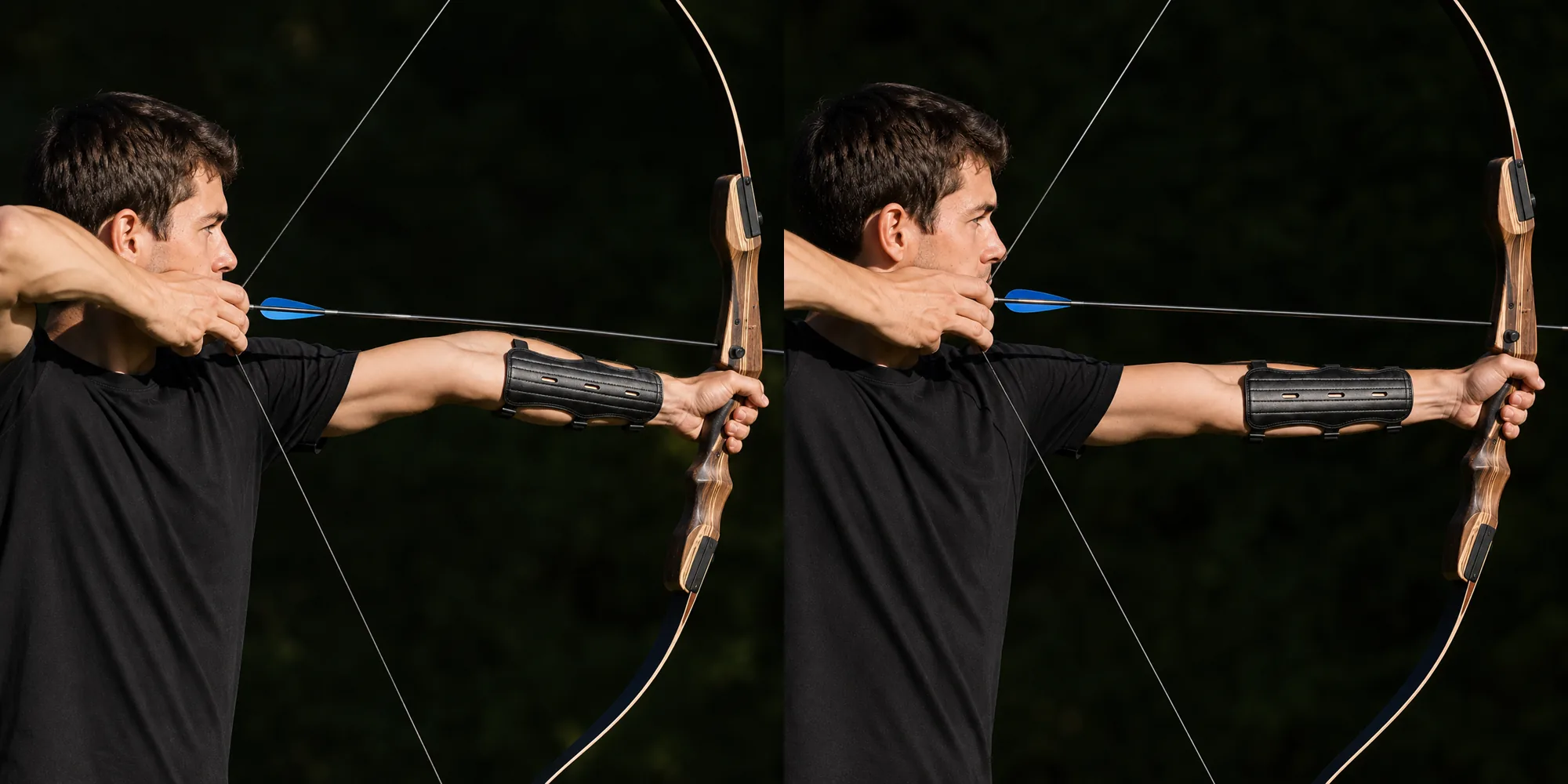
This is the cause in most cases, and it is the one to fix first, because it moves your forearm out of the string path instead of padding it.
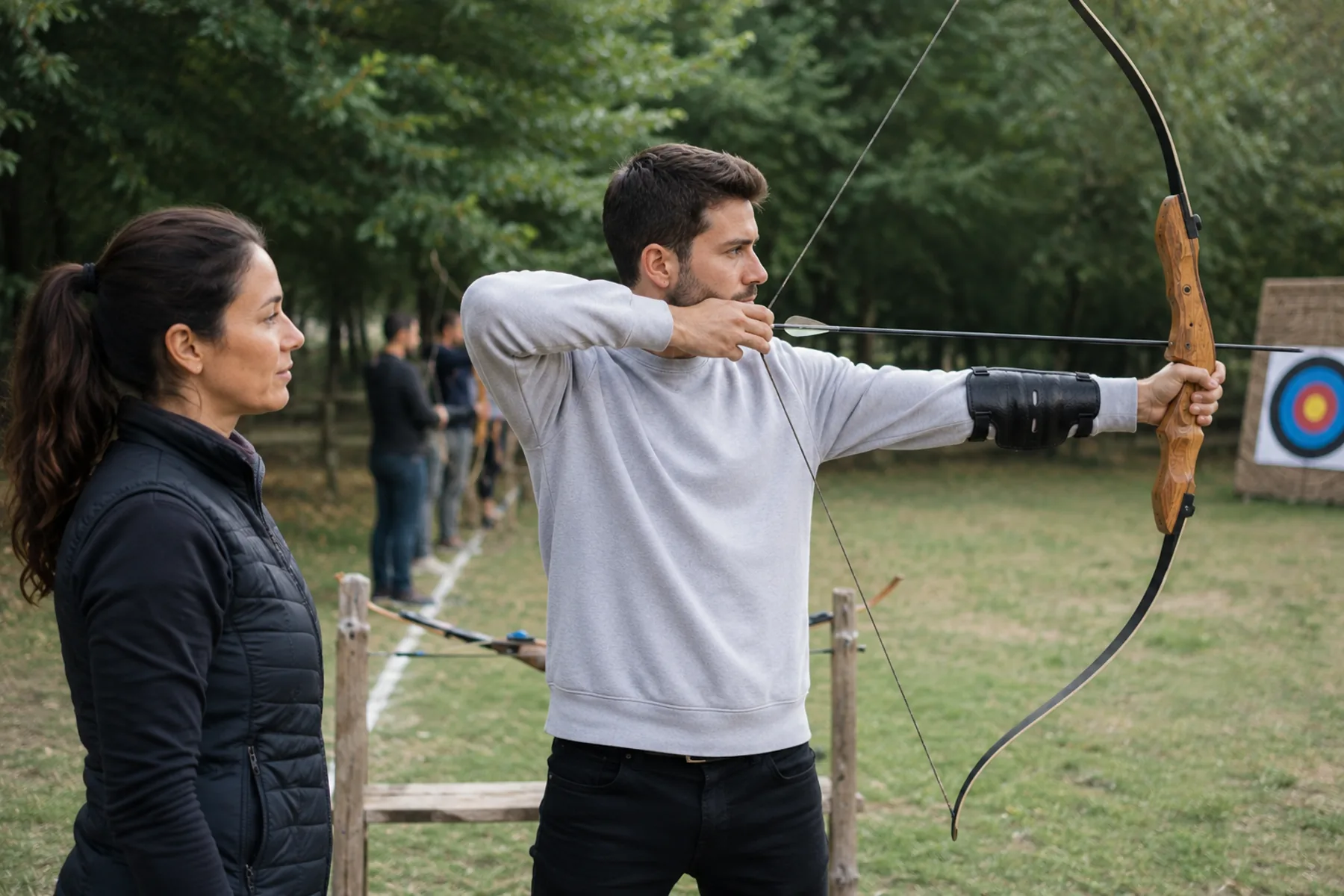
Hold your bow arm out straight and lock the elbow. Now look at your forearm. In most people, a fully locked elbow rotates the joint so that the soft inner surface of the forearm turns to face the string. You have taken the fleshiest, most sensitive part of your arm and presented it directly into the path of the release.
The fix. Rotate your elbow crease outward, toward vertical. Extend your arm toward the target, then turn the inside of your elbow so it points up rather than in. The bone rotates, the flesh follows, and the whole forearm moves out of the string line by an inch or more without your hand moving at all. Many coaches also teach a very slightly soft elbow rather than a hard lock, which achieves the same clearance more comfortably.
Do this in front of a mirror without a bow first. It feels strange for about a week and then it feels like nothing, which is how you know it has become your form rather than a correction you are applying.
Cause two: what you are wearing
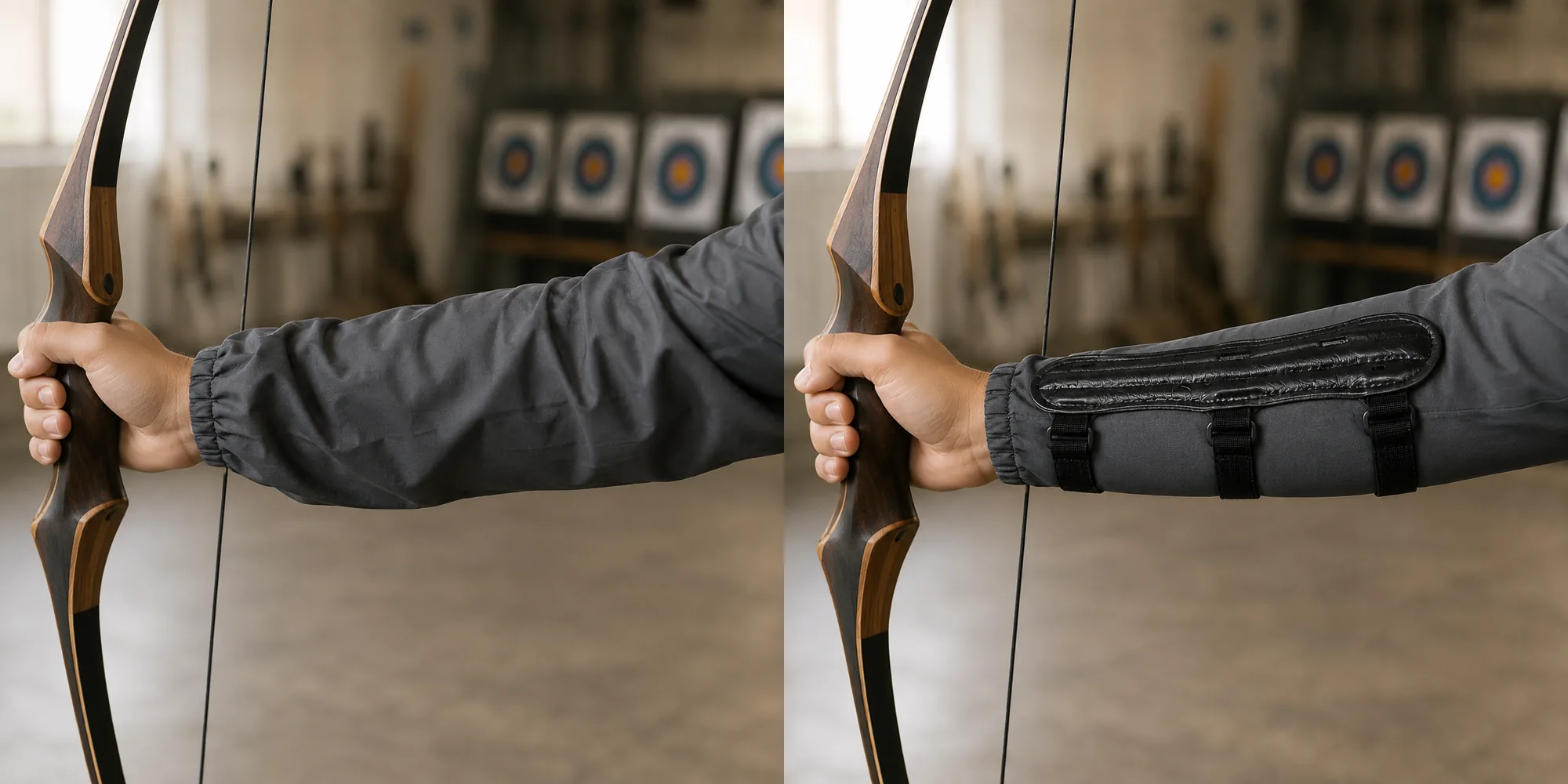
If you shot all summer without a problem and got hit on the first cold morning of autumn, your form did not change. Your jacket did.
A loose sleeve is an obstacle sitting in the string path even when your arm itself would have cleared. Fleece cuffs are particularly good at this, and so is any jacket with a gathered elastic cuff that bunches when you extend your arm. The string finds fabric long before it finds skin, and it drags that fabric across your forearm on the way past.
The fix. Either push the sleeve up out of the way, or compress it flat under an arm guard. What you must not do is strap a guard loosely over a bunched sleeve, because a fold under the plate is a ridge, and a ridge is a new obstacle you have just created half an inch further out.
Cause three: brace height
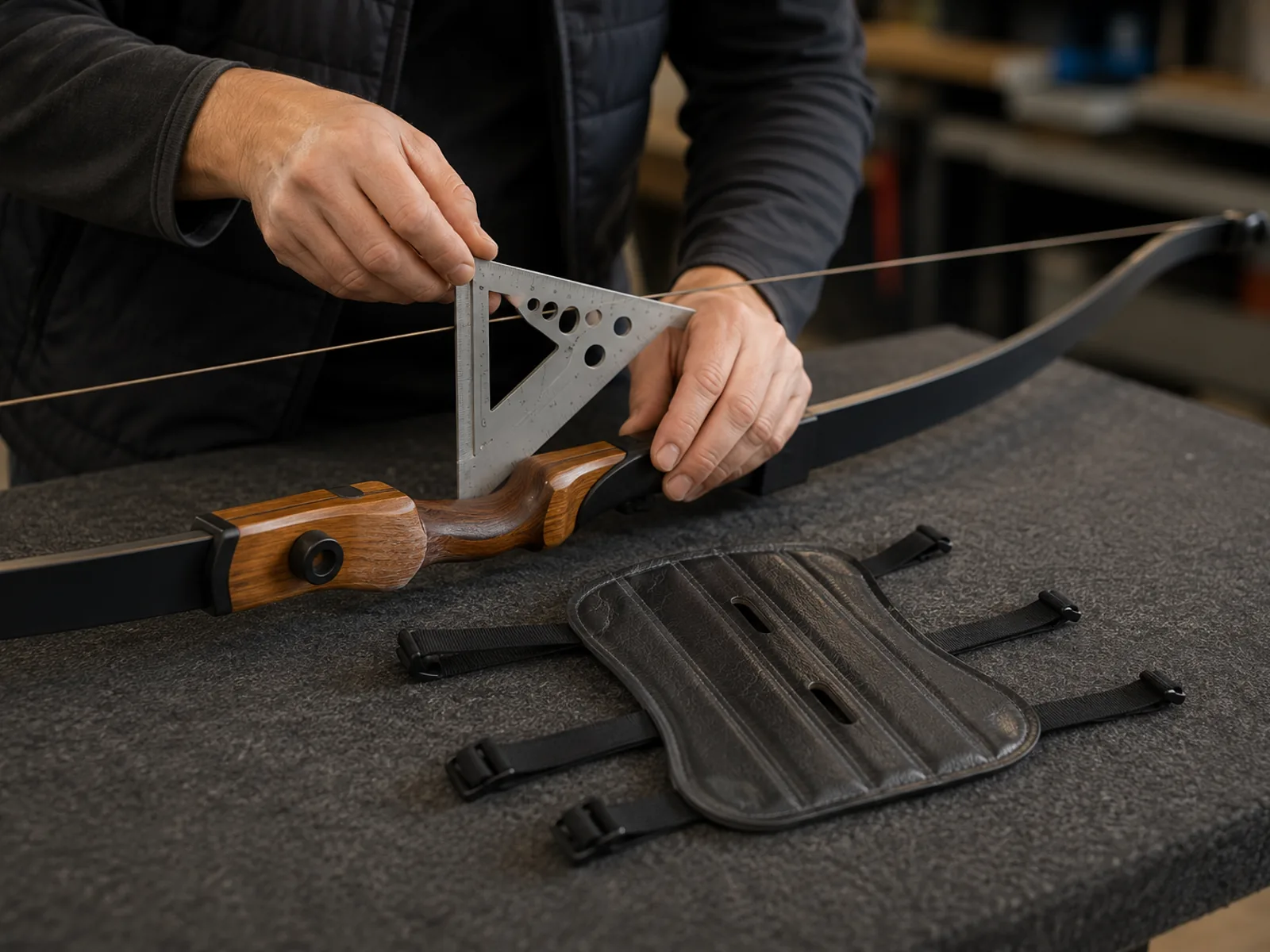
Brace height is the distance from the string to the deepest part of the grip when the bow is at rest. A lower brace height means the string starts closer to your bow arm before you have even drawn, which shortens the clearance for the whole shot.
Every bow has a manufacturer's recommended brace height range, usually printed in the manual or on the manufacturer's site. Recurve bows drift low over time as a Dacron string stretches, and a string that has been shot for a season can sit noticeably below where it started.
The fix. Measure it with a bow square and compare it against the specification. On a recurve, adding twists to the string shortens it and raises the brace height. On a compound, brace height is fixed by the geometry and is not adjustable, so if you shoot compound you can skip this cause entirely.
This is the cause to check if you have started getting hit after restringing, after twisting a string, or after buying a used bow.
Working out which one is yours
| What changed | Most likely cause | First thing to try |
|---|---|---|
| You are new to archery | Locked elbow | Rotate the elbow crease outward |
| It started when it got cold | Clothing | Push the sleeve up or compress it flat |
| It started after restringing | Brace height | Measure against the bow's specification |
| Only on some shots | Elbow, inconsistently | Film yourself and compare a clean shot to a hit |
| Always, in short sleeves, with correct brace height | Anatomy | Hyperextending elbows exist. Wear a guard permanently |
That last row is worth dwelling on. Some people, particularly those with naturally hyperextending elbows, cannot fully clear the string with any reasonable form. That is not a failure and it is not something to train away. It is a reason to wear a guard for as long as you shoot, which is what plenty of competitive archers do.
The part nobody warns you about
Here is what actually damages your shooting, and it is not the bruise.
Once your body has learned that the string can hurt, it starts protecting you without consulting you. You drop the bow arm a fraction before the release. You pull the elbow in toward your body. You loose the string before the sight has settled, because some part of you wants the shot to be over. None of these are decisions. All of them are invisible from the inside, which is why archers spend entire sessions puzzling over groups that have doubled in size.
That is the real argument for an arm guard, and it is a different argument from the one usually made. A guard does not improve your technique. It does not stop the string hitting your arm. What it does is remove the consequence, which breaks the flinch loop and buys you the calm you need to work on the elbow rotation properly. Coaches put a guard on a beginner in the first ten minutes for exactly this reason.
Fix the cause. Wear the guard while you do it. Keep wearing it afterwards for the cold mornings and the borrowed jackets, because a clean release in July does not protect you in January.
Something to take the hit while you fix the cause
Three adjustable straps, vented PU leather, one size. $19.95 with free shipping and 30 days to send it back.
See the arm guard →Related: how to wear an arm guard · which arm it goes on · guard against sleeve