
Leather archery arm guard, and what that word is doing
Why almost every arm guard is described as leather
Walk into any archery shop and the arm guards on the wall will be brown or black, grained, and stitched around the edge. That look is not decoration. It is what an arm guard looked like for several hundred years, because leather was the material available that was stiff enough to spread a string impact and flexible enough to wrap a forearm. Modern archers still expect the look, so almost everything on the market is faced to match, whether or not there is any hide involved.
The result is that the word leather has quietly become a description of appearance rather than of material. A search for a leather archery arm guard returns full-grain guards at $45 and PU guards at $9, side by side, both using the same word. Neither listing is necessarily lying. They are just answering different questions.
What Fletchguard actually sells
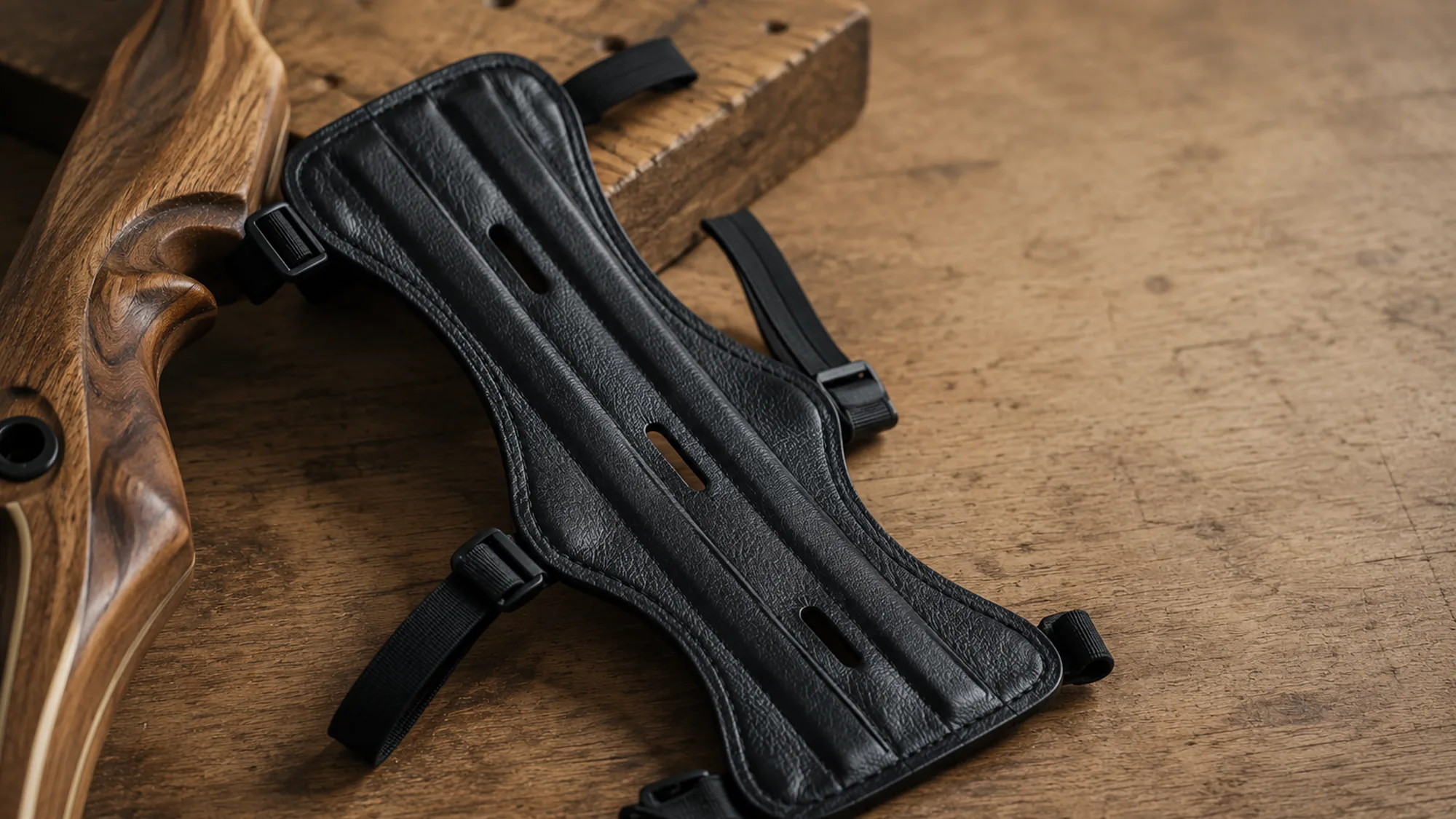
This guard is faced in PU leather. The published specification table declares the material as synthetic leather, and that is the word we use across this site. It has the grain, the matte black finish and the stitched, bound edge, and it looks entirely at home next to a wooden riser. It is not hide, and you will not find us implying otherwise in a page title or a product name.
What you gain for that is a guard at $19.95 that you can wipe clean with a damp cloth and forget about, that does not need conditioning, and that does not darken unevenly when it gets rained on during a field round. What you give up is the way good hide softens and moulds to one specific forearm over five or ten years, which is a genuine pleasure and a genuine reason some archers will only buy full-grain.
The grades, and how to read a listing
| Grade | What it is | Typical guard price | Ages by |
|---|---|---|---|
| Full-grain | The outer hide layer, grain intact | $35 to $70 | Softening, developing a patina |
| Top-grain | Hide with the surface sanded and refinished | $25 to $45 | Softening, less patina |
| Bonded leather | Leather scraps reconstituted onto a backing | $12 to $25 | Flaking at flex points |
| PU leather | Polyurethane skin over a fabric backing | $8 to $22 | Crazing after years of UV and flexing |
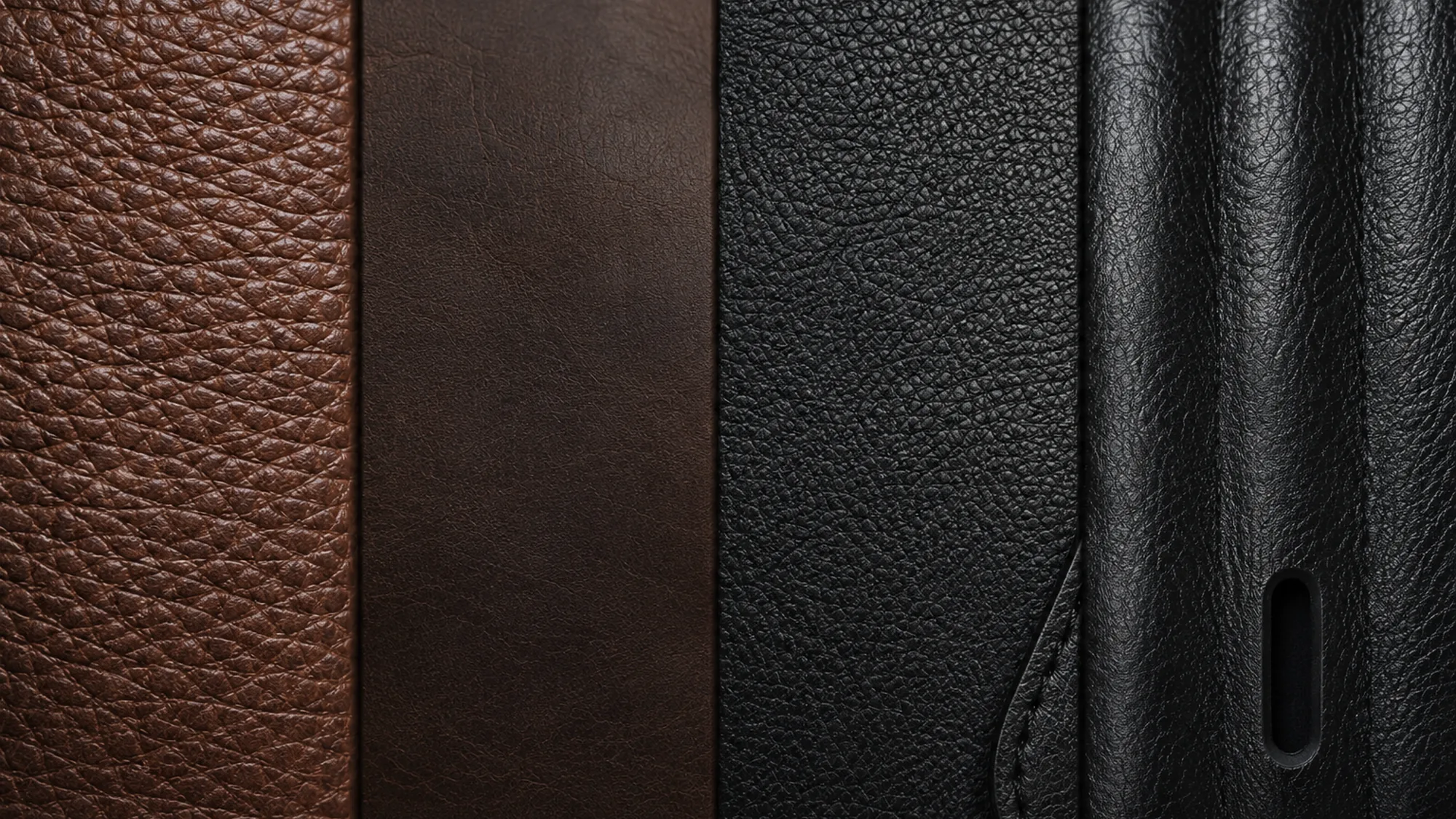
Three tells separate them on a listing. Price is the bluntest: an arm guard under $20 described only as leather is almost never full-grain. Vocabulary is the most reliable: sellers who have paid for hide say full-grain, top-grain, cowhide or bull hide, because those words justify the price. Texture is the visual one: PU has a repeating, perfectly even grain pattern, because it was embossed from a roller, while hide has irregular pores and the occasional scar.
Which one you should actually buy
If you are new, or you are buying a guard for a club box, or you want something to live permanently in a quiver pocket and take abuse, PU is the sensible answer and the money is better spent on arrows. If you shoot traditional because you care about wood and horn and hide, and you expect to own the same guard in fifteen years, full-grain hide is the facing that ages that way. What we make is the PU version: a stiff plate, three adjustable straps, $19.95, and nothing to condition.
On protection itself, the answer is that the difference is negligible for the impact an arm guard actually takes. The 2023 epidemiological review in Orthopedic Reviews recommends forearm braces as safety equipment without distinguishing between materials, and a stiff plate is a stiff plate. What matters far more is whether the guard stays in place, which is a question of straps rather than facing. That is covered on the main product page.
Care, whichever you buy
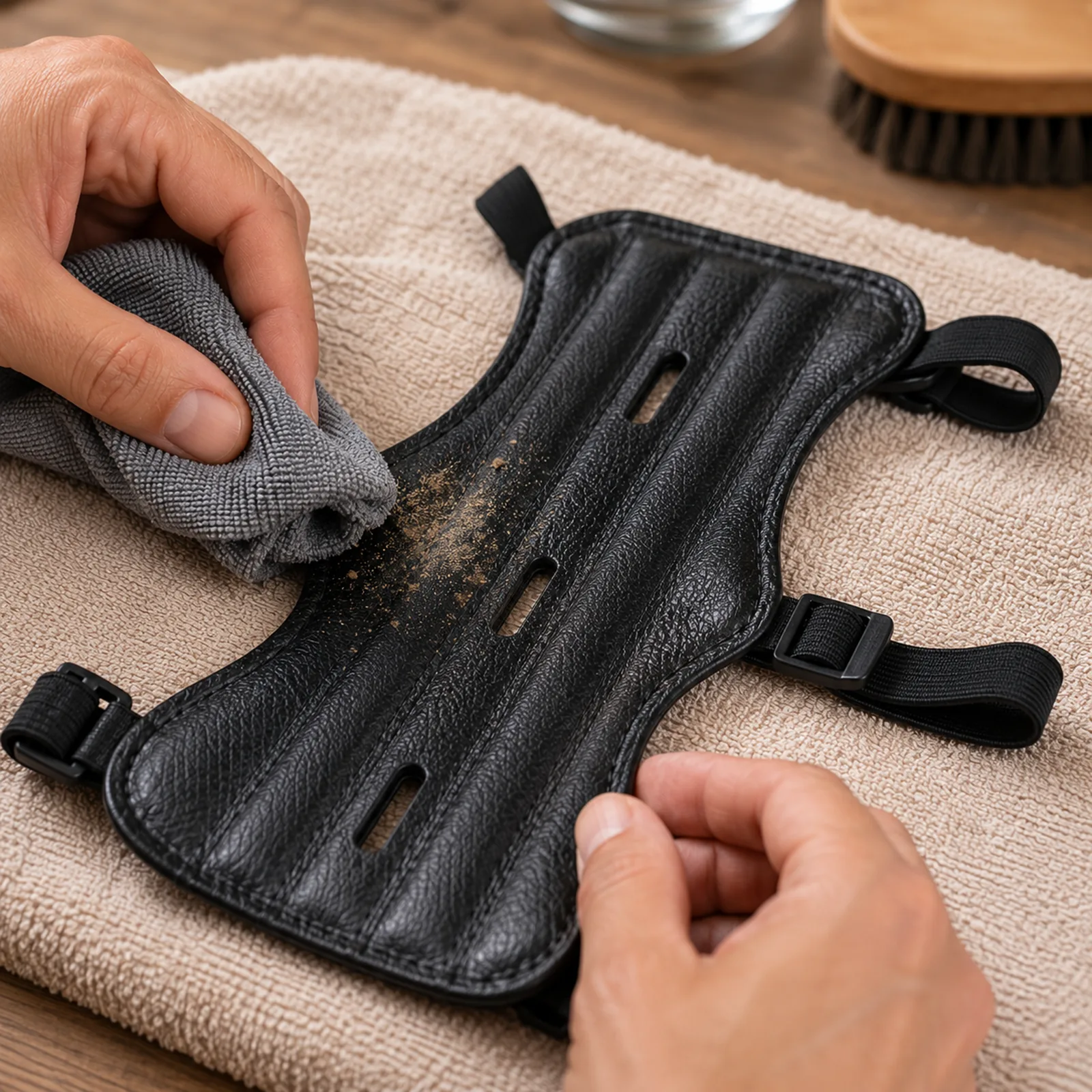
PU wants a damp cloth and shade. Do not machine wash it, do not use solvent cleaners, and do not leave it on a dashboard in July, which is the fastest way to craze the surface. Full-grain wants a leather conditioner once or twice a year and the same protection from direct heat. Both want to dry naturally rather than on a radiator, because heat is what makes an edge curl.
Questions about leather guards
Is a leather archery arm guard better than a synthetic one?
For protection, no. Both spread the impact of a bowstring across a stiff plate, and the string does not know what it hit. Full-grain leather ages better, moulds to your arm over years and looks the part on a traditional bow. PU leather costs a fraction as much, wipes clean in seconds and does not need conditioning. The choice is about longevity and looks, not safety.
Is the Fletchguard guard real leather?
No. It is PU leather, which is declared as synthetic leather on the published specification table. It has the grain and the appearance of leather but it is not animal hide. We say so on every page of this site rather than letting the word leather do quiet work in a product title.
How can I tell full-grain leather from PU on a listing?
Look for the words full-grain, top-grain, cowhide or bull hide, and a price that reflects them, usually $35 upward for an arm guard. If a listing says leather with no grade, shows a perfectly uniform surface texture and sells for under $20, it is almost certainly PU or bonded leather. A uniform, repeating grain pattern is the clearest visual tell.
Does PU leather crack over time?
It can, eventually, which is the trade-off. PU is a polymer skin over a fabric backing, and years of flexing plus UV exposure will craze it where full-grain would simply soften. Keeping it out of direct sun in a quiver pocket rather than on a car dashboard makes a real difference, and so does wiping it rather than soaking it.
Will a leather-look guard suit a traditional longbow setup?
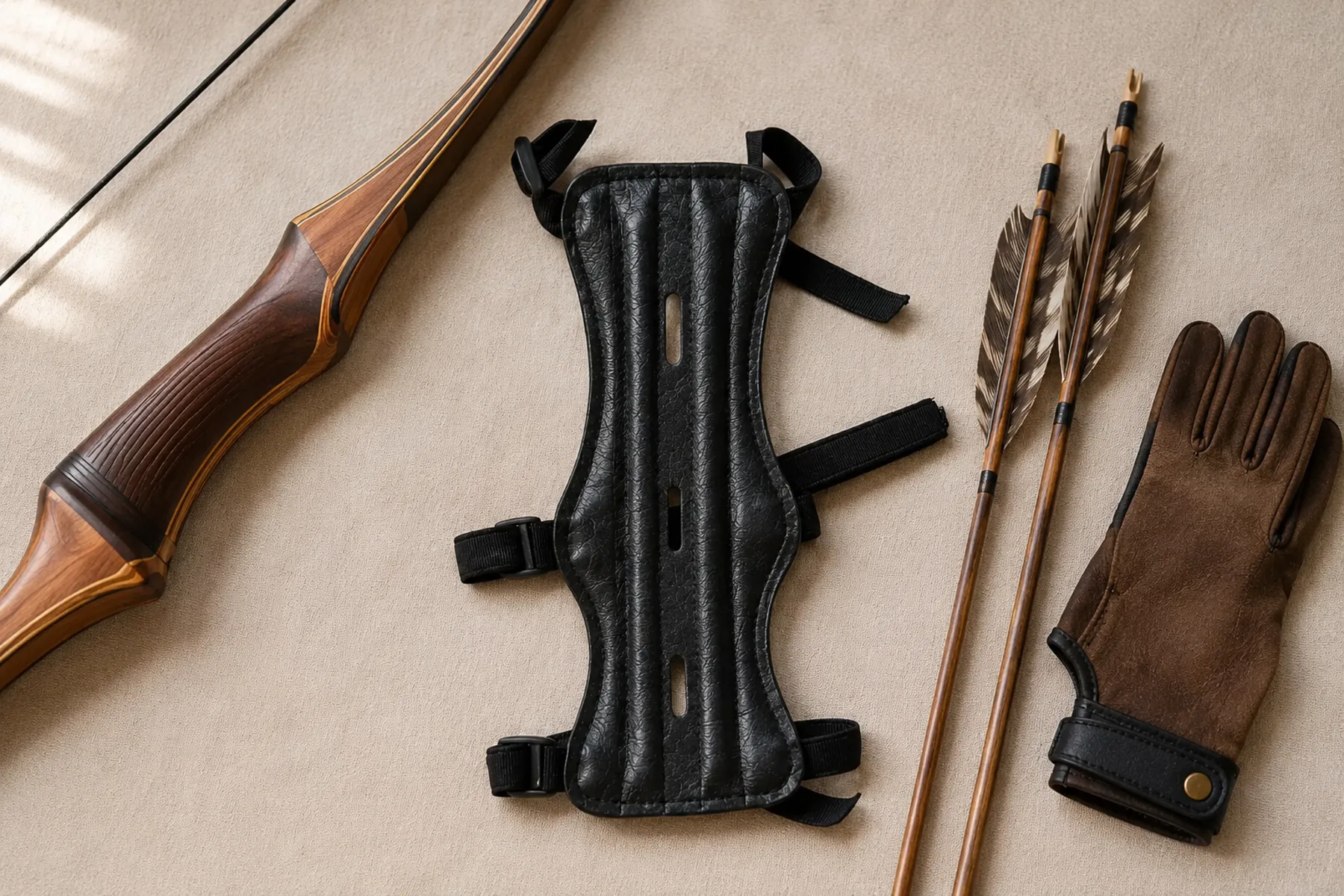
Visually it sits closer to a traditional kit than a bright synthetic sleeve does, and the grained black finish is unobtrusive next to a wooden riser. Full-grain hide costs three to four times as much and asks for conditioning twice a year; this one wipes clean and keeps its finish.
Still deciding on the basics? The arm guard overview covers construction and the fit method, bow arm guard explains which arm it goes on and why, and the guard against sleeve comparison is worth a read if you are torn between formats.