
Bow arm guard: the one arm that actually needs protecting
Getting the side right
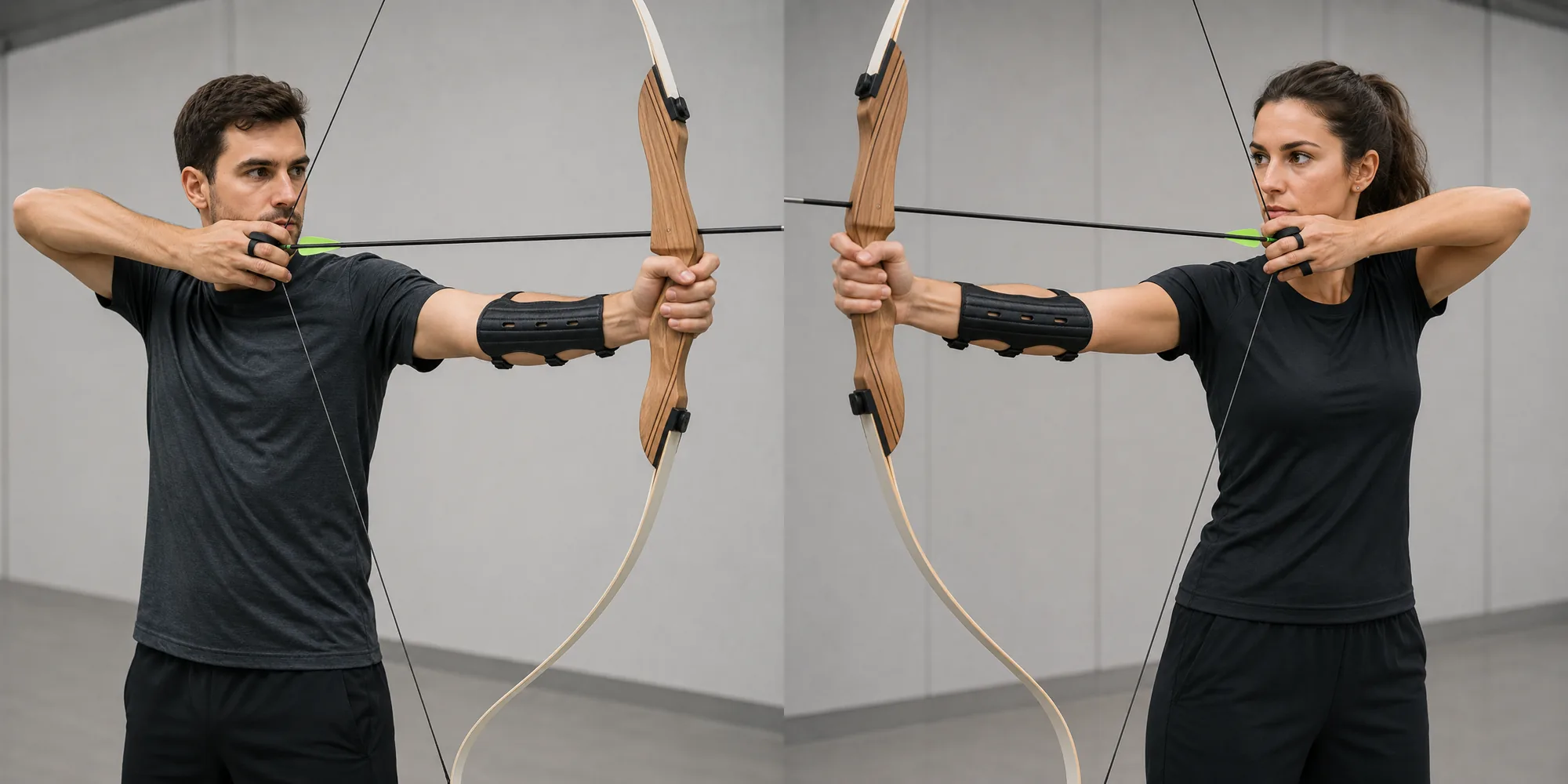
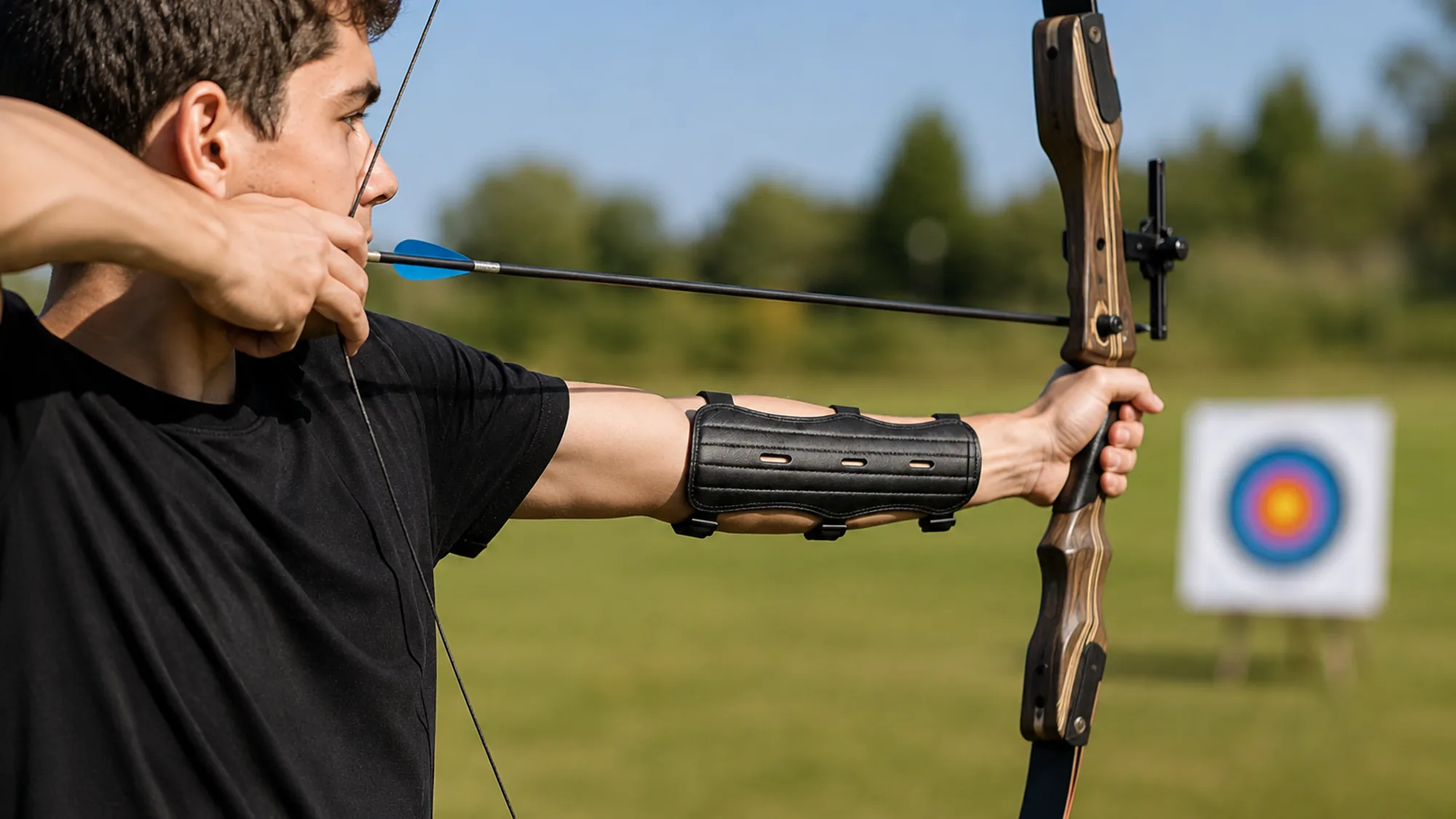
This trips up more beginners than it should, partly because archery handedness is named after the drawing hand rather than the bow hand. A right-handed archer draws with the right hand and therefore holds the bow in the left. The string, on release, travels forward past the inside of that left forearm. So the guard goes on the left. Left-handed archers do the exact opposite, and the same guard fits either way round because it is symmetrical.
If you buy an arm guard and it feels like it is fighting you, check you have not put it on the drawing arm out of habit because that is your dominant side. It happens on almost every beginners course.
Why the string finds your forearm at all
At full draw your bow arm is extended toward the target and the string sits a few inches from your inner forearm. On release it snaps forward along very nearly that same line. Whether it touches you comes down to three things, and equipment is only one of them.
The elbow. This is the big one. If you lock your bow elbow straight, the joint tends to rotate so the soft inner surface of the forearm turns into the string's path. Rotating the elbow crease outward, toward vertical, moves that flesh out of the way and is the single most effective fix in archery. Many coaches teach a very slightly soft elbow for the same reason.
The clothing. A loose sleeve is an obstacle the string will find even when your arm would have cleared it. This is why archers who have shot for years without a guard suddenly get hit on the first cold morning of the season.
The brace height. The distance from the string to the deepest part of the grip at rest. A low brace height puts the string closer to your arm before you have even drawn. If you have recently restrung or twisted a string and started getting hit, measure it against your bow's specification before blaming your form.
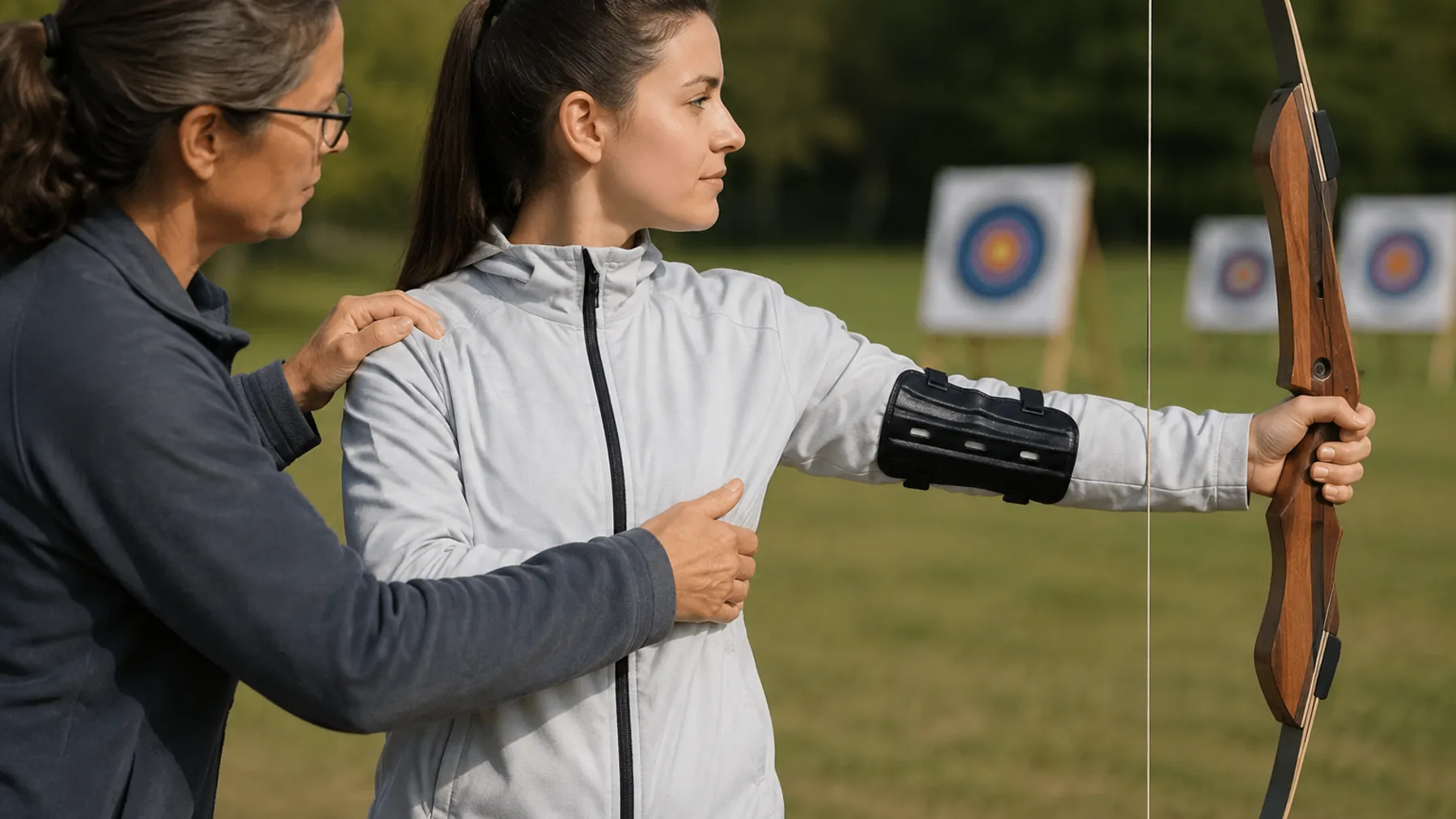
Where a guard should sit, and how tight
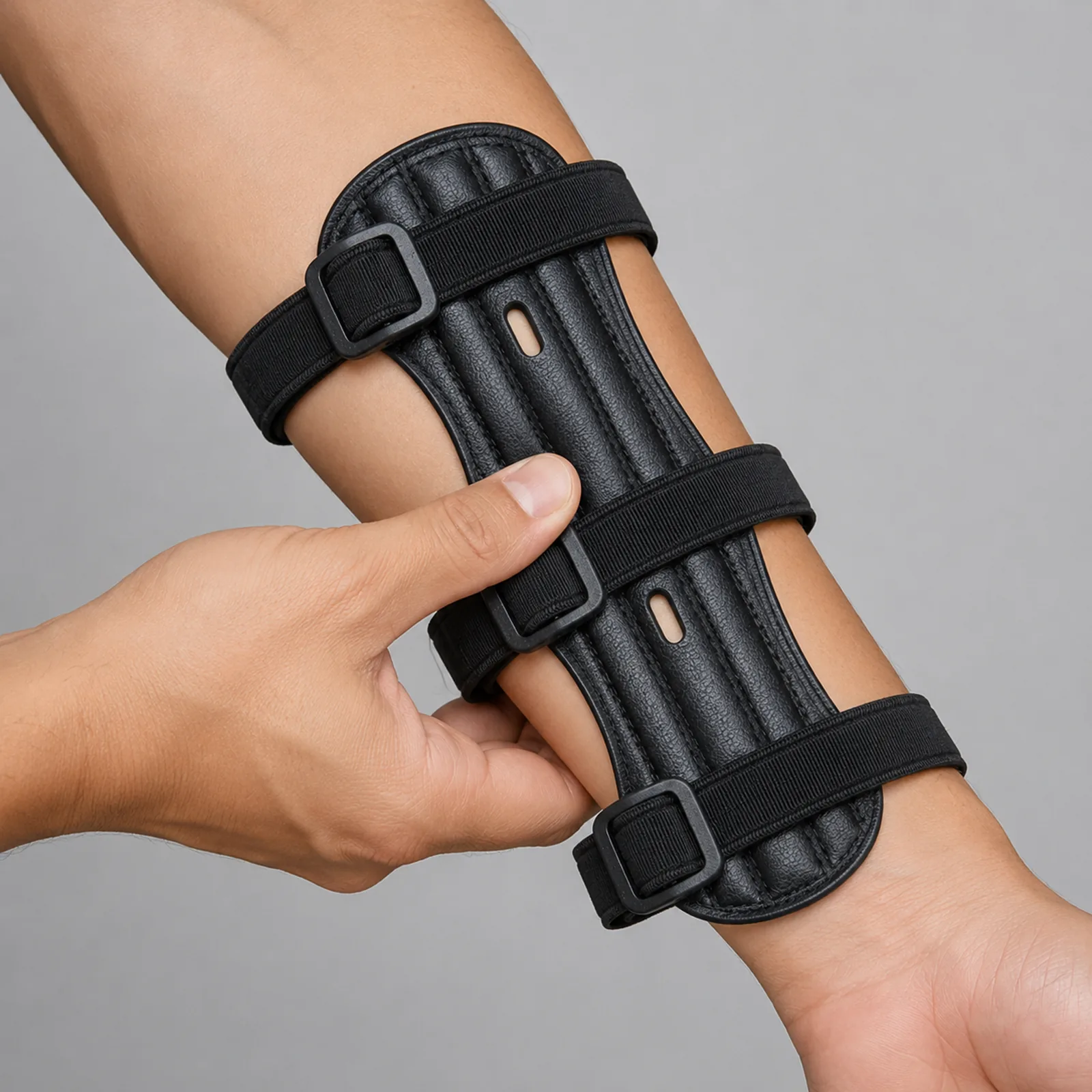
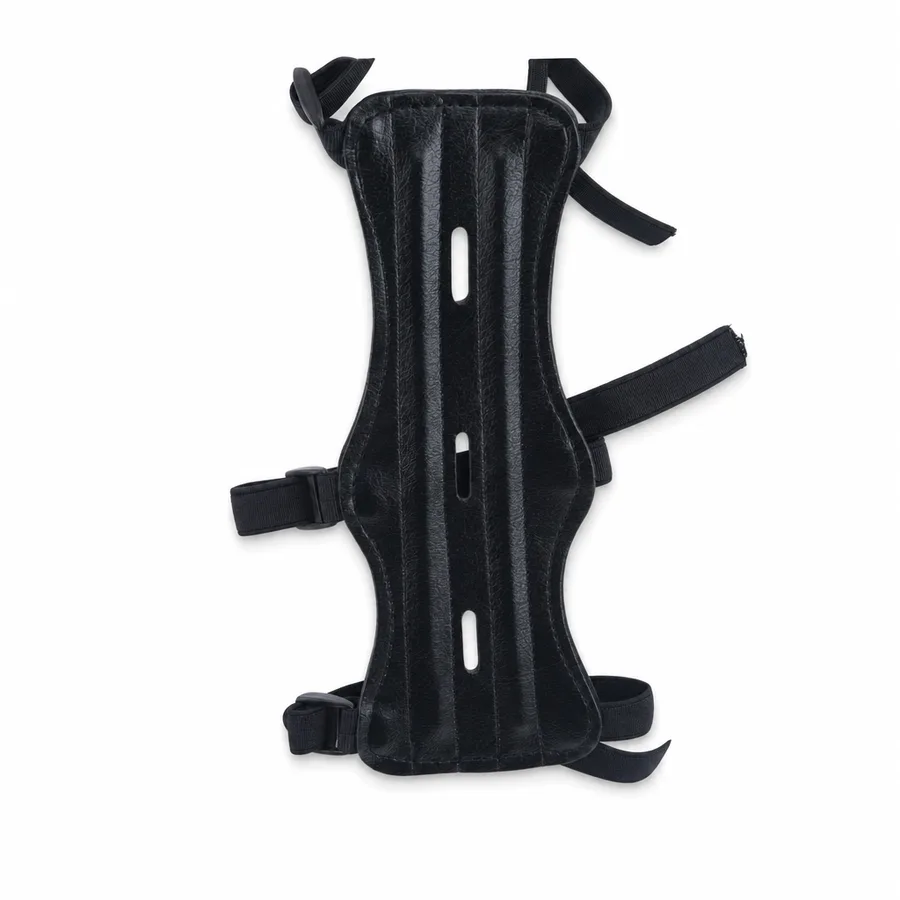
Put it on the inner face of the forearm, wide end toward the elbow and narrow end toward the wrist, covering the run from just above the wrist bone up toward the elbow crease. That is the string line. Worn on the outer forearm it is decoration.
For tension, work in this order: middle strap first and snug, then the wrist strap, then the elbow strap last and loosest. A forearm tapers, so equal tension on all three straps ends up too tight at the wrist and too loose at the elbow, and the guard creeps downward over a session. Three of the buyers in our review corpus describe the first fitting as fiddly, and this ordering is the reason none of them mention it twice.
The test is simple. Push the plate sideways with a thumb. If it rotates, tighten the middle strap. If your fingertips start to tingle after twenty minutes, loosen the wrist strap. That is the whole adjustment.
Does a guard fix your form?
No, and anyone telling you otherwise is selling something. A guard does not stop the string hitting your arm. It stops the hit from hurting, which is a different and more useful thing than it sounds, because pain is what turns a technical error into a habit. An archer who has been struck twice starts dropping the bow arm early and releasing before the sight settles, and neither of those is a decision they are aware of making.
Wear the guard, fix the elbow rotation calmly over the following weeks, and keep wearing it afterwards for the cold mornings and the borrowed jacket. That is what most experienced archers actually do. It is also why the 2023 epidemiological review of archery injuries in Orthopedic Reviews lists forearm braces among the safety equipment it recommends, rather than treating them as a beginner's crutch.
Common questions
Which arm is the bow arm?
The bow arm is the one holding the bow. A right-handed archer holds the bow in the left hand and draws with the right, so their bow arm is the left. Left-handed archers are the mirror image. The guard always goes on the bow arm, because that is the forearm sitting in the path of the string.
Do I need a guard on both arms?
No. The drawing arm never crosses the string path, so it is never struck. If you have somehow bruised your drawing forearm, something is wrong with your anchor or your release rather than with your equipment, and a guard would hide the symptom instead of fixing it.
Where exactly should the guard sit on the forearm?
On the inner face, covering the line from just above the wrist bone up toward the elbow crease. That inner surface is where the string travels. Sitting it on the outer forearm, which happens more often than you would expect with new archers, protects a part of the arm nothing was going to hit.
Does a bow arm guard help with accuracy?
Indirectly, and more than people credit. A string that clips your forearm loses energy and gets deflected, which pushes that arrow off line. Beyond that single shot, a guard removes the flinch that follows a bad hit, and flinching costs far more points over a session than one deflected arrow does.
Should a bow arm guard be tight?
Snug enough that it cannot rotate, loose enough that you forget it is there. Set the middle strap first and firmly, then the wrist strap, then the elbow strap last and loosest. If your fingertips tingle you have gone too far, and if the plate shifts when you push it with a thumb you have not gone far enough.
More detail on construction and sizing is on the main product page. If you want to know what the word leather means on an arm guard listing, that is covered under leather arm guards, and the causes of string slap get a full treatment in what causes string slap.