
Arm guard against arm sleeve
By Corinne Vasek, club archery coach · Updated
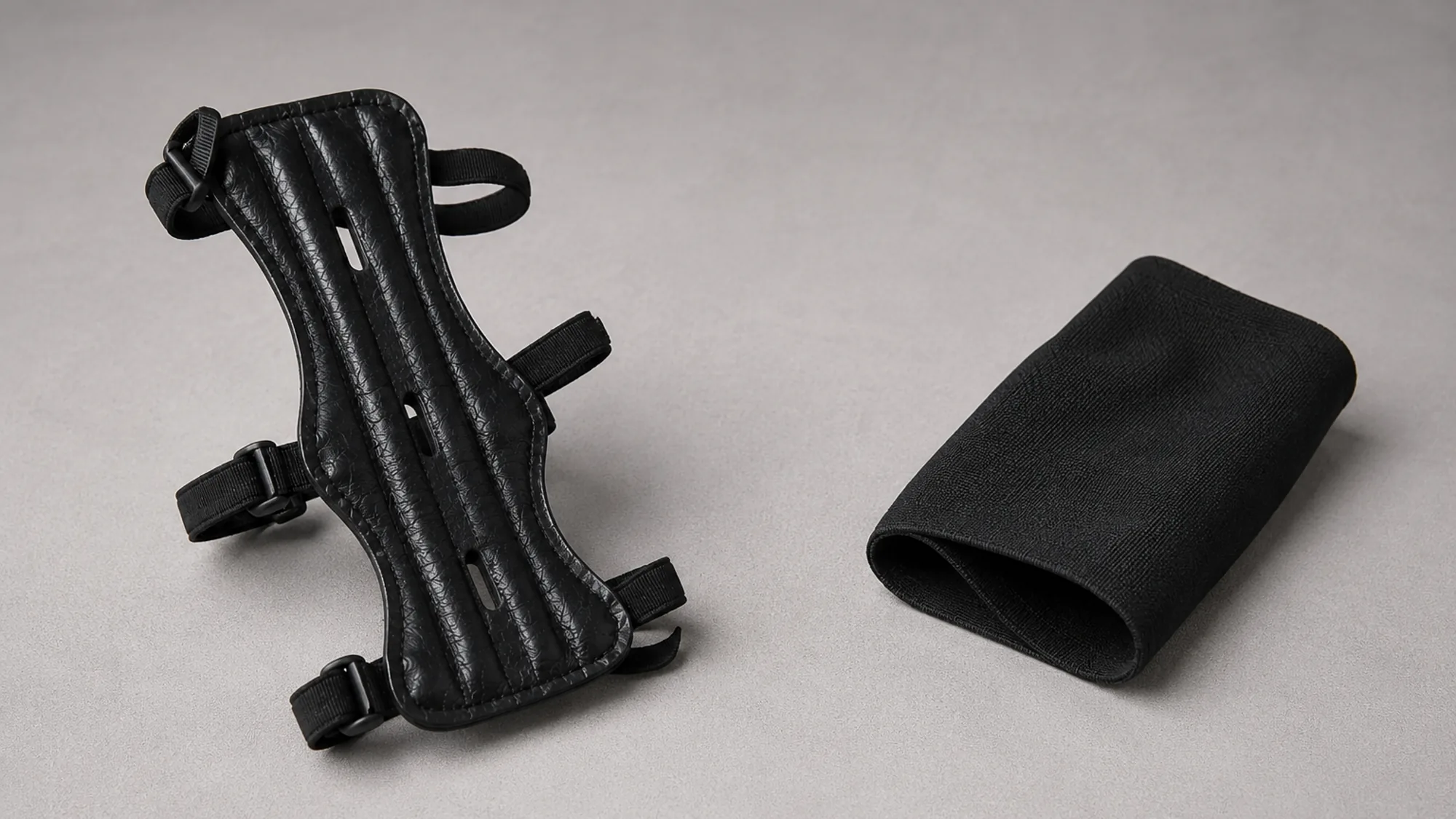
Walk down a shooting line at a club and you will see both. Some archers have a stiff plate strapped to the forearm, others have what looks like a cut-off sports sock pulled up to the elbow. Both are solving the same problem and they are not interchangeable.
Which one suits you comes down to four things: your form, your climate, your discipline and how long your forearm is. Here is how they actually differ.
On this page
The physical difference — spreading against absorbing.
The physical difference
A rigid guard is a stiff plate held off the softest part of your arm by its own shape. When the string hits it, the plate takes a concentrated line of force and spreads it across its whole surface before any of it reaches you. That is why it works even against a hard hit from a heavy bow, and why the plate stiffness matters far more than what it is faced with.
A sleeve is a tube of fabric, sometimes with a little padding. It does not spread force in the same way. It absorbs a portion of the impact and takes the friction, which is the part that causes the worst skin damage, but a genuinely hard hit will still be felt through it. What it does very well is cover a long run of arm, evenly, with nothing to adjust.
Side by side
| Rigid guard | Elastic sleeve | |
|---|---|---|
| Spreads a hard impact | Yes, across a stiff plate | Partially |
| Coverage length | The area the plate covers | Wrist to elbow, evenly |
| Stays in position | Yes, with three straps | Tends to roll down |
| Compresses a jacket sleeve | Yes | No, it goes under |
| Heat in summer | Low if vented | Depends heavily on the fabric |
| Fits an unusual forearm | Within a range | Stretches to almost anyone |
| Adjustment needed | Three straps, once | None, pull it on |
| Typical price | $8 to $25 | $7 to $18 |
Where a sleeve wins
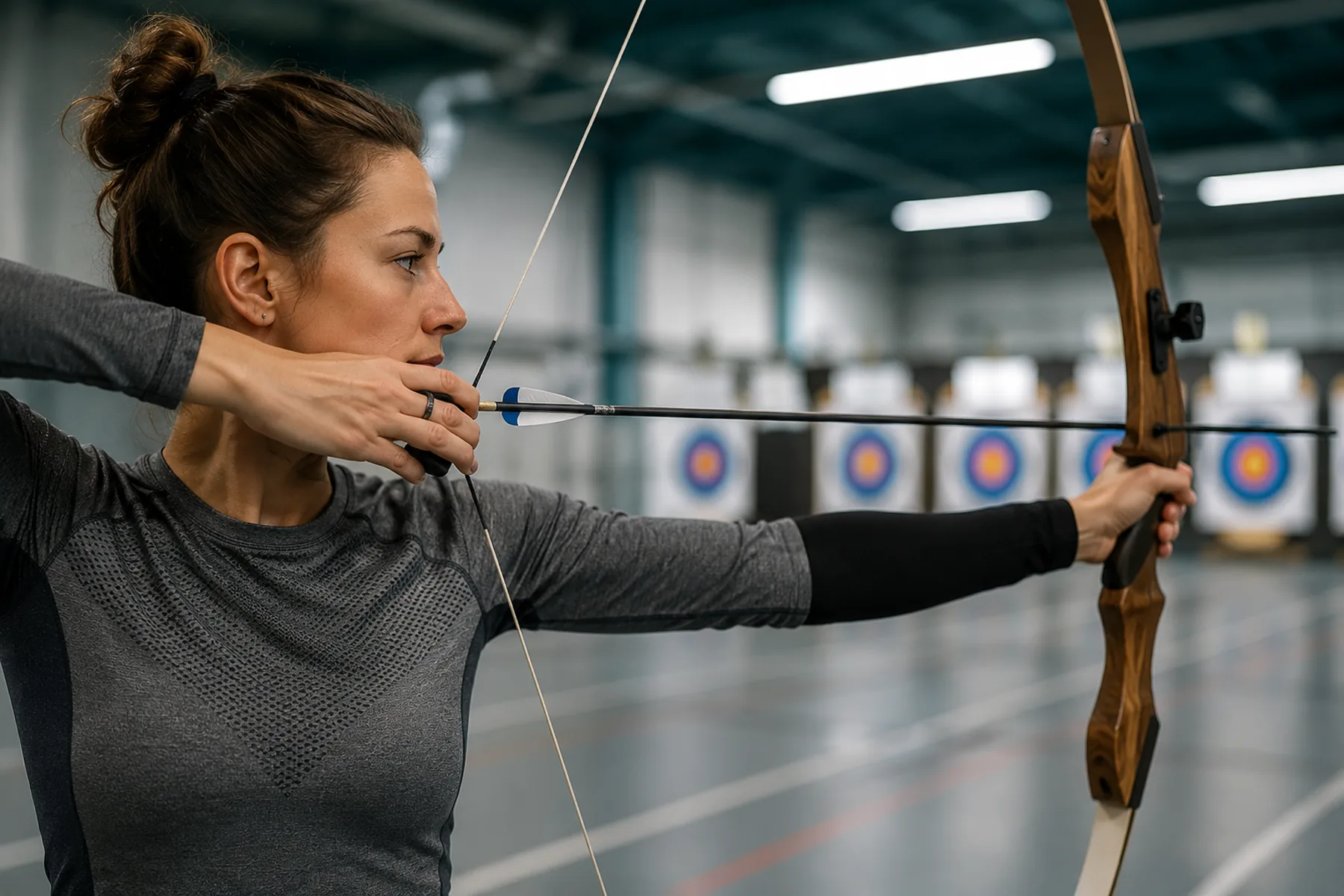
Long forearms. This is the strongest argument. A compact plate on a long forearm can leave the wrist end exposed, and the wrist end is where beginners get caught. A sleeve covers the whole run without a fitting question.
Unusual arm sizes. Elastic stretches. If you measured above 13 inches at the widest point and a one-size plate is marginal for you, a sleeve sidesteps the problem entirely. The measuring method is in the size guide.
Nothing to fiddle with. No straps to set in the right order, nothing to rotate, nothing to loosen when your fingers tingle. For a club running taster sessions with a queue of people, that is worth something.
Clean form and light clothing. If you are an experienced target archer who gets clipped once a season on a bad shot, a sleeve is ample and less intrusive.
Where a rigid guard wins
Beginners. New archers get hit harder and more often, because a locked elbow puts the forearm directly in the string path rather than clipping the edge of it. A hard hit is what a stiff plate is for. It is also worth noting that the 2023 epidemiological review of archery injuries in Orthopedic Reviews names forearm braces specifically among the safety equipment it recommends.
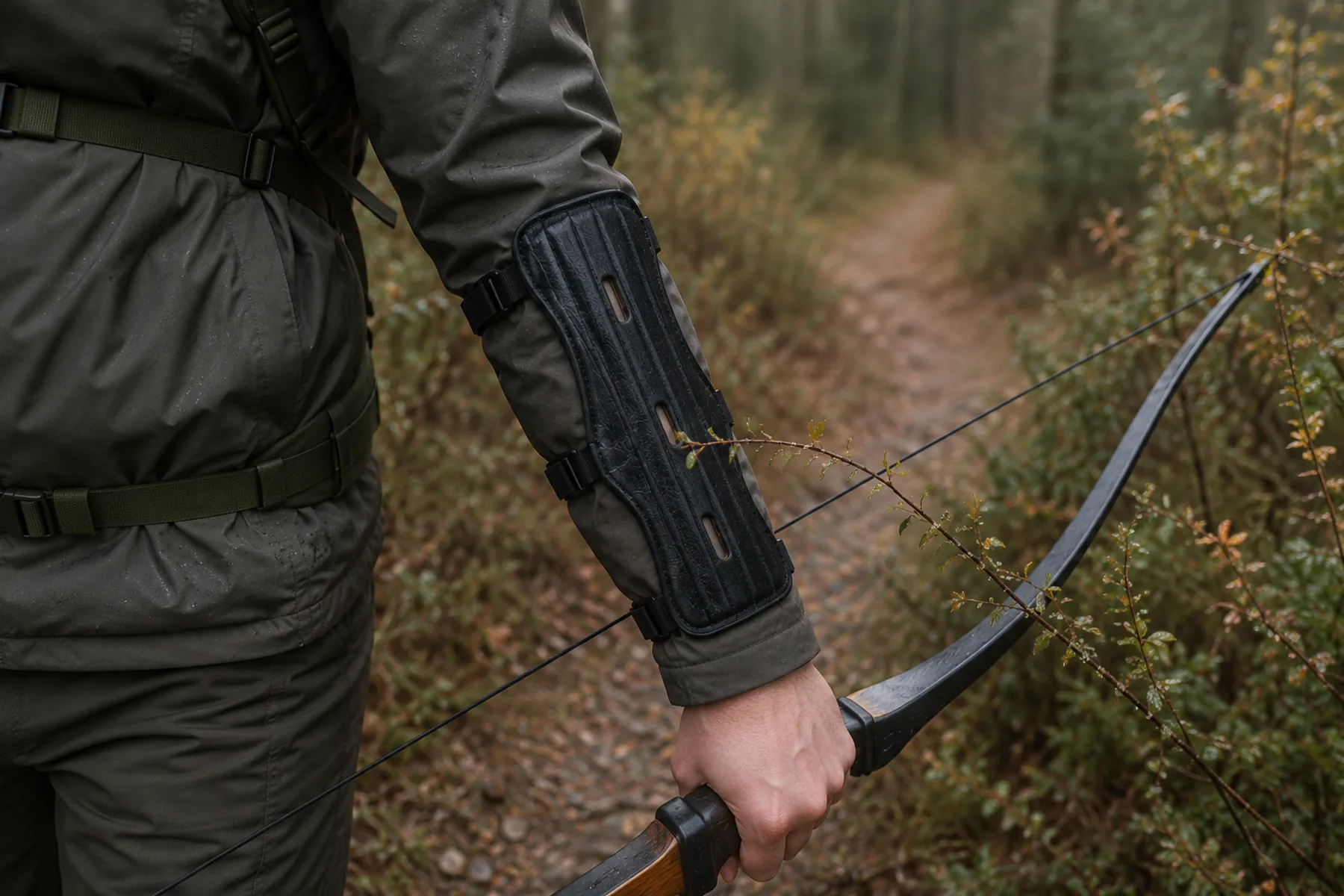
Cold weather. This one is decisive and it does not get said enough. A sleeve goes under your jacket, which means your jacket sleeve is still bunched in the string path with nothing holding it flat. A rigid guard goes over the top and compresses that fabric. If you shoot through winter, this alone settles the argument.
Field archery and roving. Pushing through brush shreds fabric sleeves and rolls them down your arm. A strapped plate stays put.
Heavy bows. The more energy in the string, the more you want it spread rather than partially absorbed.
Which to pick
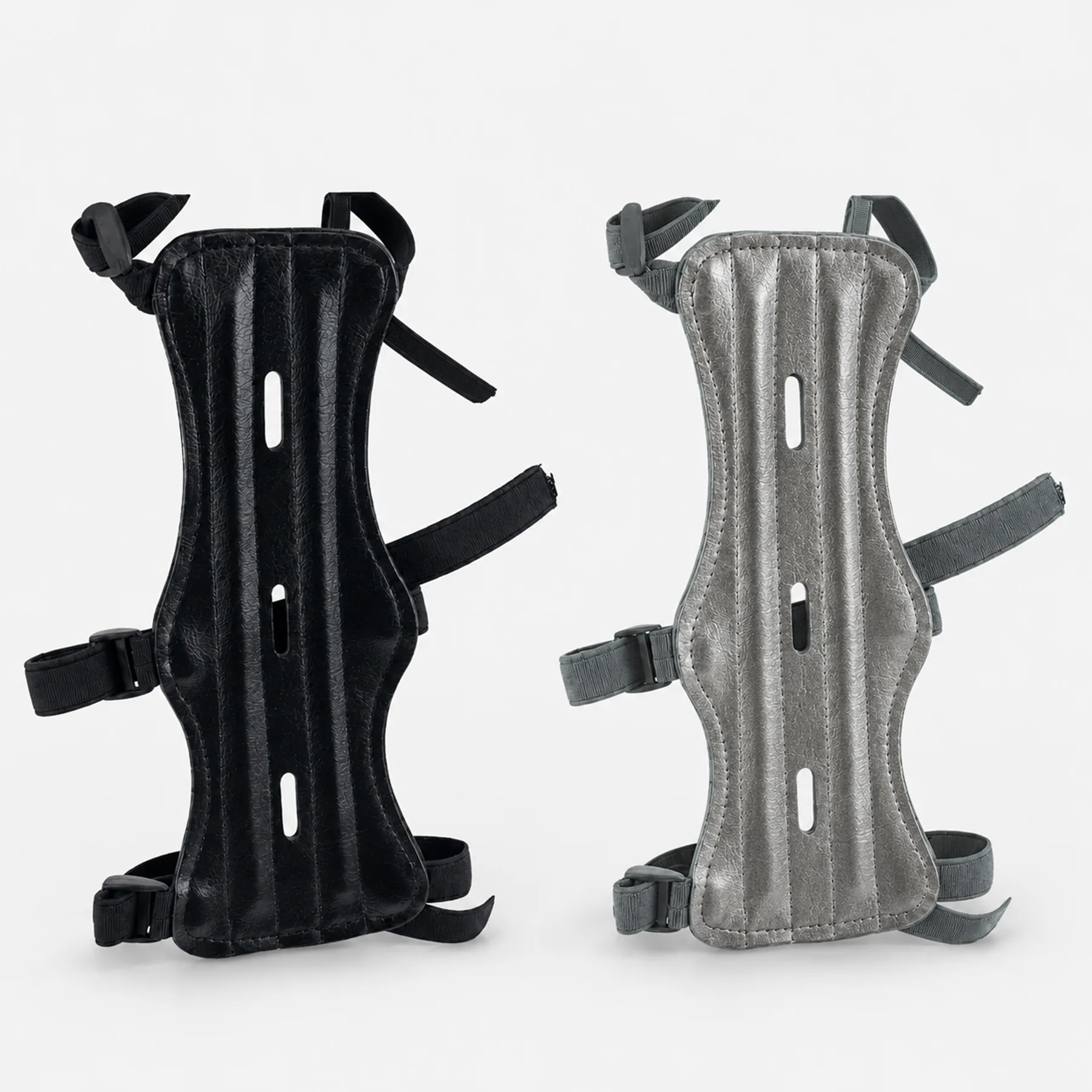
If you are new, buy the rigid guard. You will get hit harder than you expect while your elbow rotation is still a conscious correction rather than a habit, and the plate is what handles that. It is also the option that copes with a jacket, which matters from about October onward in most of the northern hemisphere.
If you are experienced, shoot target in warm weather, have clean form and a long forearm, a sleeve is comfortable and entirely sufficient. Plenty of good archers use nothing but a sleeve for years.
If you shoot all year round, own both. They cost about the same as a dozen decent arrows between them, and you will find yourself reaching for the plate every time the temperature drops.
One thing neither of them does is fix the cause. If the string is reaching your arm at all, something in your form or setup is putting it there, and the breakdown is in what causes string slap. Protection buys you the composure to work on that calmly. It does not replace the work.
The rigid one, if that is where you landed
Three independently adjustable straps, vented so it does not cook your arm in summer. $19.95 with free shipping and 30 days to send it back.
See the arm guard →Related: size guide · how to wear one · chest guards explained